A wooden spoonThis article was converted by SimpRead. Original source: www.zhihu.com

If you are a reserved, introverted person who avoids confrontation and strives to prevent trouble by meticulously covering all bases—deeply influenced by traditional Chinese cultural values such as gentleness, kindness, respectfulness, frugality, and humility—you believe conduct must be proper and beyond reproach. In that case, you must, while still young, force yourself to act in ways diametrically opposed to your natural disposition.
For example, if you habitually over-prepare for every task, try deliberately not preparing at all, then experience how you handle unexpected situations and tackle challenging problems on the spot. Start with low-stakes scenarios where you can reasonably bear the consequences. Because later in life, you’ll realize that if your first half has been overly smooth, encountering unfamiliar challenges may leave you flustered and unsure how to respond—triggering intense feelings of failure. After all, youth affords ample excuses for mistakes; but growing older and still acting like a complete novice feels deeply embarrassing—even to yourself.
While young, practice standing up for yourself several times—even if it means getting into a loud argument. Don’t hide away like a timid turtle withdrawing into its shell. Without ever crossing this boundary, you’ll remain timid forever—hesitant to claim your legitimate rights out of fear of losing face, meek and hesitant, unable to say “no” to mistreatment—and ultimately, you’ll despise yourself. Psychological self-reproach is torment in its own right.
If you’re not naturally inclined to initiate friendships—or prefer solitude—you must still actively attend social events and networking gatherings. Regardless of others’ warmth or enthusiasm, make an effort to strike up conversations. Only through broad exposure can you discern whether someone is genuinely arrogant—or simply, like you, awkward at expressing themselves. Interacting with diverse people brings nothing but benefits.
Because only later in life do you realize: if you never pushed past your personality’s limits while young, you’ll lack understanding in many areas. As the saying goes: “What you owe, you eventually repay.” The life lessons you skipped—avoiding them because you didn’t want to, refused to, or insisted on preserving your “true self”—will confront you later when real-world challenges demand competence you never acquired. And your performance? Failing grade.
That’s why we sometimes angrily complain: “How can someone live so long yet understand so little? How could they possibly miss something so obvious?” Human capacity to handle situations isn’t inherently correlated with age—some people truly never grasp certain principles or common-sense truths, even after a lifetime.
So don’t fall for inspirational platitudes claiming “just stay true to yourself.” When you hit a real roadblock, you’ll discover life demands cultivation—deliberate improvement across skills and capabilities, especially in handling complex situations. Ultimately, you alone must weather hardship. Without the ability to read people or manage multiple concurrent complexities, how will you cope with life’s inevitable 80–90% disappointments?
Wang Fugui
Doing just one thing enables extraordinary life transformation—low cost, high certainty.
And this one thing requires no innate talent, no connections or resources—only execution and the cognitive shift gained from reading this article once.
YouTube star Dankoe rose from poverty to become a social-media icon earning $5 million annually—by doing precisely this.
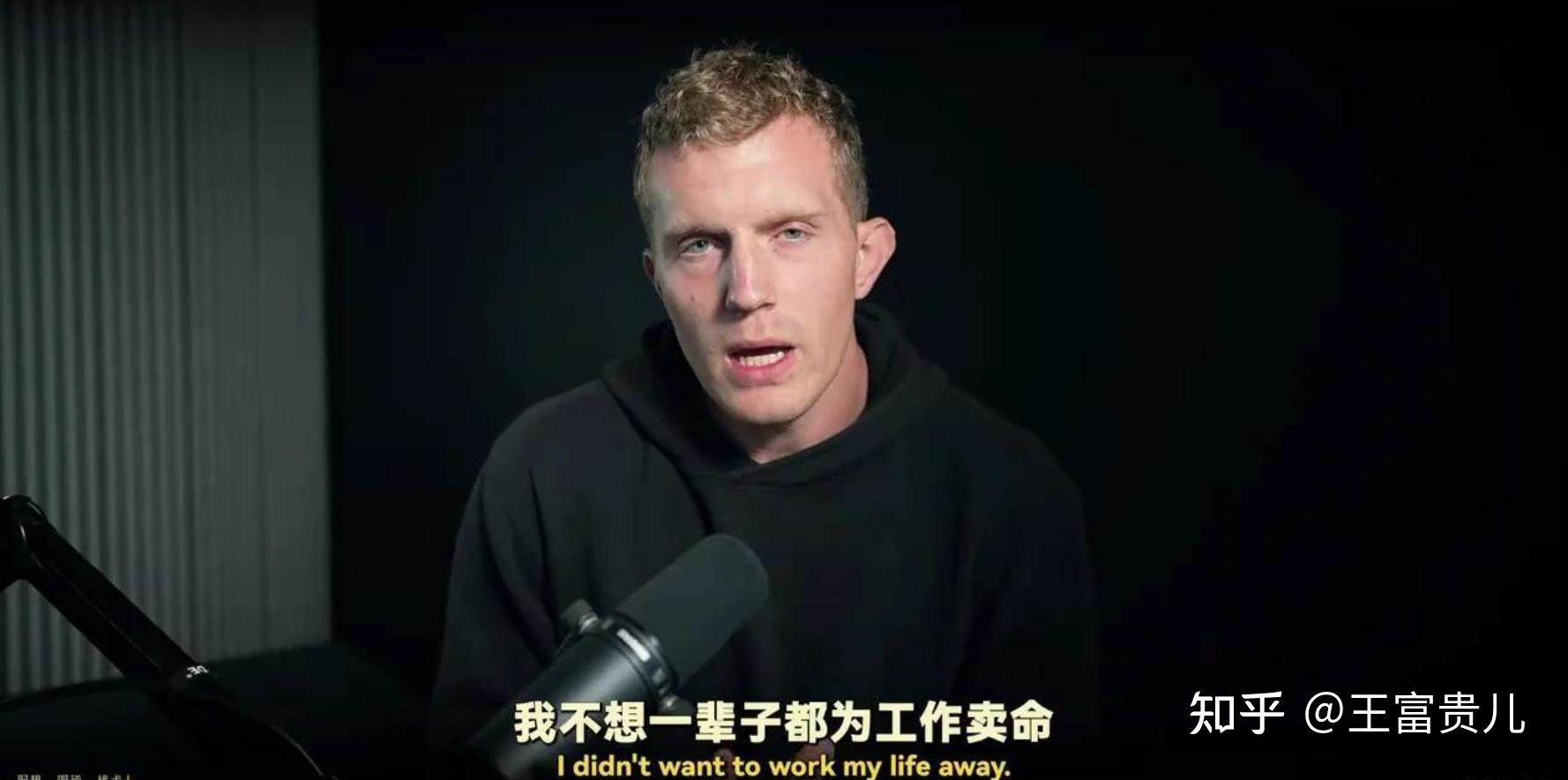
No suspense: this one thing is:
Cultivating an output-oriented hobby.
Once accomplished, this becomes your most critical investment at age 20—and yields returns hundreds or thousands of times greater throughout your life, including but not limited to:
Securing jobs and collaboration opportunities; entering new (and higher-tier) social circles; meeting and seizing opportunities presented by mentors (“life-changing benefactors”); altering your life trajectory entirely.
Including myself, many held a mistaken belief before 2024:
We wrongly assumed knowledge, hard work, and passive input (e.g., reading) could change fate—so for over a decade, I maintained rigorous reading habits and frequently paid for courses.
I thought lack of change stemmed from insufficient accumulation—waiting for a “tipping point.”
But reality proved my view profoundly wrong.
Input does not transform your life—output does.
If you doubt this, reflect on these questions:
-
Which books did you read last month? What were their core arguments?
-
What recent video stunned you—and how have you applied its insights to your life?
-
From your most recent industry training, how many actionable takeaways do you recall?
No need to answer aloud—you already know.
Psychology calls this the generation effect. Cognitive scientists have studied memory formation for decades. Their conclusion is stark and singular:
People who actively generate information retain it at least 40% more deeply than those who passively receive it.
Not because they’re smarter—but because the act of output forces the brain to reorganize information. Reorganization equals comprehension. Unreorganized information is merely transient.
That’s why 90% of what you read vanishes.
Every piece of content you scroll daily—the articles you skim, the podcasts you hear—if you never output anything, none of it accumulates meaningfully in your brain.
It queues up… then fades away, one by one. You’re not building a warehouse. You’re leaking.
This isn’t about talent or discipline—it’s how your nervous system operates.
Your brain’s memory system follows a ruthless principle: Unused information has no reason to persist. Output is the most efficient way to “use” information. Input without output is, neurologically speaking, nearly indistinguishable from non-existence.
Let’s clarify two key points:
I. How does an output-oriented hobby transform your life?
Because “output” is fundamentally four things happening simultaneously:
1. It forces structure-building
When writing an article—or filming a short video—you must answer:
What’s the core issue?
What’s the logical sequence?
Which points are essential—and which can be cut?
In other words: you’re compelled to shift from “information consumer” to “structure designer”—a perspective utterly absent during passive input.
2. It exposes cognitive gaps
Once you begin outputting, you’ll repeatedly hit walls: “I can’t write further.”
This isn’t due to poor writing skill—it’s because you haven’t clarified your thinking. Before output, you often don’t even realize how unclear your own understanding is.
Outputting continuously surfaces your “cognitive blind spots,” pushing you to refine inputs, fill knowledge gaps, and seek precision.
3. It creates feedback loops
After publishing content, you receive responses:
Which parts attract attention?
Which ideas resonate—or get challenged?
This forms a growth cycle:
Input → Output → Feedback → Adjustment → Re-output
This is where real development occurs. Most people become addicted to positive feedback—igniting a flywheel effect.
The “flywheel effect” means applying initial force to spin a wheel; once rotating, momentum sustains motion—helping overcome the hurdle of long-term consistency.
Cybernetics states: Over time, systems with feedback nodes diverge irreversibly from those without them.
4. It connects you to the outside world
Only through output do you become visible—to potential clients, mentors, collaborators.
Zhuge Liang didn’t become the legendary strategist Zhuge Wu Hou solely due to genius—he emerged from Longzhong first, launching his career. “Getting out there” matters most.
No matter how much you input—if no one sees it, markets ignore it—it’s zero value.
Being seen is the output process.### II. Why Must It Be an Output-Oriented Hobby? Why Won’t Work Suffice?
Many people think: “My job is essentially a form of output too—so why won’t work suffice?”
This is an especially common cognitive error.
Output in work has one fatal structural flaw: it serves others’ goals—not your own accumulation.
The PowerPoint deck you write is meant to satisfy your boss; the proposal you draft aims to advance the project; the sales-pushing message you send targets client sign-off…
These outputs aren’t valueless—but they share one critical trait: the sovereignty over them does not lie with you.
The format is set by others, the direction dictated by leadership, the standards defined by the industry. You’re merely filling content into someone else’s system.
Output-oriented hobbies are different.
You choose the topic, define the format, pace, and standards—essentially taking full ownership. This difference in sovereignty isn’t just perceptual—it’s neurobiological.
Neuroscience introduces a concept called dopamine prediction error.
In simple terms: the brain’s reward system doesn’t reward outcomes—it rewards the process of having expectations fulfilled. When you autonomously select a topic, construct an idea, and produce content, that process triggers sustained dopamine release.
It’s not because you succeeded. It’s because your brain is tracking a goal you set yourself, and at each step of execution, it receives signals confirming that expectation is being met.
That’s why people who love writing can lose themselves for hours—but feel mentally drained after just half an hour of writing a PowerPoint deck.
It’s not about the content. It’s about sovereignty. Sovereignty determines dopamine; dopamine determines persistence; persistence determines depth of accumulation.
Output-oriented hobbies also offer something work cannot: a margin for error. In work, mistakes carry real consequences—so every word you write is filtered through risk-avoidance.
Risk-avoidant output does not generate genuinely yours ideas. It yields only safe enough expressions.
By contrast, hobby-based output carries no—or minimal—penalty for error.
So you dare articulate authentic judgments, express uncertain viewpoints, and use your own voice—not industry jargon.
Authenticity is the true compound-interest engine of output-oriented hobbies. Authentic content finds authentically aligned audiences.
Those people become one of your most vital assets in the second half of life.
Authenticity is also humanity’s greatest moat in the AI era. It constitutes personal brand equity—the reputation of your personal brand is compound interest.
 So now comes a new question: What exactly qualifies as an output-oriented hobby?
Gaming, binge-watching, working out, cooking, traveling, photography… these are all consumption-oriented hobbies.
You consume experiences, pleasures, and time. Consumption itself isn’t wrong—but it doesn’t generate assets with compounding value.
All of these are valuable.
Their value flows primarily to you, mainly as emotional value. But the value of output-oriented hobbies flows to others.
You create game walkthroughs, write TV show reviews, teach fitness techniques, film food or travel guides, share photography tips…
That’s the core distinction between consumption- and output-oriented hobbies: one satisfies the self; the other earns external recognition. And they shape you in fundamentally different ways.
If you spend all your spare time from age 25 to 35 on consumption, what you get is: ten years of instant gratification.
If instead you invest that time in an output-oriented hobby, what you gain is: a coherent thinking system, visible personal accumulation, and a community drawn to you by your output.
Same amount of time—two entirely different returns.
At this point, some readers may nod in agreement—and then do nothing. Not because they disagree—but because a deeper barrier blocks them.
Many hold a deeply entrenched misconception about “output”: they believe output must meet some threshold before it’s “worthy” of being seen.
Ideas must be uniquely insightful; writing must be polished; content must be comprehensive; knowledge must be systematic.
This misconception is a hidden perfectionist trap. It subtly reinforces—using seemingly rational logic—that:
I’m not ready yet.
Wittgenstein once said something weighty:
“The limits of my language mean the limits of my world.”
What you can articulate is your true cognition. What remains unspoken—even if crystal-clear in your head—is not truly yours. It’s merely something you’ve temporarily hosted.
That “ready state” you keep waiting for won’t arrive after you’ve consumed enough input—or when you feel prepared.
It only emerges in hindsight—after you’ve produced enough output—and realize you were already there.
What truly stops you from outputting isn’t ability—it’s fear of exposure.
You fear being mocked for what you write; you fear expressing an incorrect opinion; you fear others reading it and thinking, “That’s it?”
This fear has a more precise name:
You’re using “not being ready” to shield yourself from confronting the untested assumption: “My authentic thoughts may not be worth seeing.”
And you’ve never actually tested that assumption—you’ve simply chosen not to begin, while leaving it unchallenged.
You’re not waiting to be ready. You’re using “being ready” as a shield.
 So—what kind of output-oriented hobby suits you?
Let’s clarify one thing first:
An output-oriented hobby ≠ writing ≠ making short videos…
It’s simply that, in today’s internet era, running a personal media channel is one of only two lowest-barrier entry points—and highly universal.
And social media is the single greatest leverage tool—no contest.
Its definition is singular:
Transforming your own thinking into an externally visible form.
Hmm—so yes, options exist, but they’re limited.
Examples include writing novels, becoming a thought leader on niche forums, contributing to GitHub repositories, etc.
To choose wisely, consider these three principles:
-
In which domain have you already thought just a little deeper than most people? You don’t need to be an expert—just one layer beyond those around you. That layer is your starting point for output.
-
Which format feels least resistant during the act of output? Some type more fluently than they speak; others articulate ideas more naturally aloud than in writing; some code more precisely than they describe in words… Follow the path of least resistance—start first, optimize later.
-
On which topic do you hold a judgment that diverges from mainstream consensus? That divergence isn’t a flaw—it’s your most valuable output material. Because people don’t seek out views identical to theirs.
Find the intersection of answers to these three questions—that’s where your output-oriented hobby begins.
P.S.: For social media platforms, prioritize TikTok and Xiaohongshu (Little Red Book); Butterfly (Huoshan), Zhihu, WeChat Official Accounts, and Bilibili rank secondarily.
As you cultivate an output-oriented hobby, you’ll grow continuously—and forge high-quality connections through output.
You’ll meet someone equally passionate about a particular issue—and because you’ve already published on it, they’ll instantly know whether deep conversation is worthwhile.
You’ll encounter opportunities—and because you’ve already outputted, others will instantly assess whether you’re the person they need.
An output-oriented hobby is how you steadily build, for your future self, a searchable, readable database.
That database stores your authenticity—your complete, unfiltered self. This is the one thing no AI tool can replicate—and no economic cycle can erase—in the AI era.
You’re not just cultivating a hobby—you’re building a self whose value appreciates the more it’s used.
Monetization? Merely a byproduct of this process.
Finally—and most importantly—discard all your excuses:
“Once I have time,” “Once I’m ready,” “Once…”—toss them all.
Start today.
Your First OutputPick any idea you’ve thought about in the past three days—and, in 100 to 300 words, write down your genuine judgment.
No need for completeness, no need for logical chains, no need for conclusions.
Just authenticity—then, post it.
It can go on WeChat Moments, Xiaohongshu, Weibo, Douyin—any platform works.
But it must be posted—not kept only in your head. The real significance of this step isn’t the content itself; it’s that your brain completes a full action for the first time:
From “I have an idea” → “My idea is received by the external world.”
The moment this action completes, something inside your brain loosens. That loosening? It’s the signal that your real beginning has started.
Many wait for that signal before they’re willing to begin—but the signal appears only after you begin.
Build Your Minimal Output Unit—Next Week
For the next seven days, do one thing daily: express, in 100–300 words, the most authentic thought you had that day.
Only rule: Don’t wait for inspiration. Don’t wait for perfection. Don’t hoard it. Think it today → write it today → post it today. It could be a judgment sparked by something you saw; a subtle discomfort from a conversation; or disagreement with a sentence you read—and why.
Format doesn’t matter. Platform doesn’t matter. Word count doesn’t matter. What matters is that it’s your genuine thought today—not what you think others want to see.
On Day 7, reread all seven together. You’ll notice two things: First, you’re far more thoughtful than you believed. Second, one or two topics will grip you—you’ll find yourself unable to stop writing about them.
That unstoppable direction? That’s the core zone of your output-oriented passion.
Remember it. In Week Two, start there.
Next Month
There’s no single “right” direction you’ll instantly identify—you must test.
At month’s end, answer these three questions—not in your head, but in writing:
First: Which output format feels least resistant to you?
Looking back, when did output feel most effortless? Typing? Filming short videos? Writing code? Recording podcasts? Follow the path of least resistance—not because it’s “best,” but because low resistance means sustainability. Sustainability matters 100× more than perfection.
Second: During which time window does output feel most natural?
Not when you think you “should” post—but when, over this month, your mind was most active and least forced: morning commute? Lunch break?睡前? Or those 15 minutes before scrolling videos? Embed output into that window—don’t invent a new one.
Third: What topic makes you keep writing—unable to stop?
This is the most important question. Not stopping isn’t about verbosity—it’s because, on that topic, your judgment center differs from most people’s. That center is the true anchor of your output-oriented passion. Find it—and everything else becomes far more natural.
By month’s end, you won’t be an influential creator.
But you’ll gain something far more valuable than influence:
You’ll see, clearly for the first time, the shape of your own thinking.
That shape will grow sharper—and stronger—each year thereafter.
Most readers will do one thing here: bookmark this—and close the tab.
Then, three days later, forget entirely what this article said. Bookmarking is the most efficient way the brain replaces action-feeling with storage-feeling.
The moment you tap “bookmark,” your brain releases a tiny dopamine hit—tricking you into believing, “I’ve already handled this.”
Then—nothing happens.
So do just one thing now: Open your Notes app.
Write your first genuine thought after reading this—not “That’s right,” not “Very insightful.” You may even argue with me.
It’s the first disagreement, uncertainty, or urge to dig deeper rising in your mind. Put it into your own words—and post it anywhere.
Your second half of life doesn’t begin the day an opportunity arrives.
It begins quietly—the night you first turn your authentic thought into a shape others can see.
That moment could be tonight.
And every real leap begins right there.
Tang Yu
There’s an easily overlooked point—one I haven’t seen others mention:
Do everything possible to accumulate abundant, beautiful memories you’re proud of—and fully commit, once, to a belief-driven pursuit.
I say this because, in life’s second half, we inevitably face something called major psychological impact.
This impact isn’t necessarily painful—it’s more often drastic shifts in our living environment.
Its effect is enormous—far beyond imagination. All behavior stems from it. Without resolving this, merely correcting behavior is nearly futile.
So to counteract the dizziness such change induces, we must forge, while young, a sufficiently heavy ballast stone for our inner world.
Consider Ximen Qing from The Plum in the Golden Vase.
I recently re-read the novel, studying Ximen Qing closely—and found his tragic end (promiscuity, excess, death from sexual exhaustion) wasn’t merely due to lust or greed. The deeper cause was his extremely weak mental resilience: he simply couldn’t handle the massive, rapid changes fate thrust upon him within just a few years.
Ximen Qing wasn’t born wealthy or powerful. His rise was sudden—his wealth and status exploded in just one or two years after marrying Meng Yulou and Li Ping’er, completing an abrupt class leap.
Yet psychologically, such massive positive change is itself an extremely high-intensity stressor. Faced with sudden high status and great fortune, Ximen Qing’s interior was hollow—he lacked the corresponding inner core to digest this abrupt gift of fate.
When ordinary people confront drastic environmental shifts, their psyche often suffers severe damage—typically manifesting in two ways: inward attack (depression, anxiety, silent self-consumption), or—as with Ximen Qing—what psychology calls manic defense.
He couldn’t let himself pause—because pausing would unleash panic over “moral unworthiness” and spiritual emptiness. To avoid pain and suppress subconscious anxiety, he resorted to the most extreme method: overwhelming sensory pleasure and intense sexual stimulation—using physiological euphoria to forcibly override psychological void.
That’s also why many severely depressed individuals paradoxically exhibit strong sex addiction or hedonistic behavior—not because they’re truly joyful, but because their brain’s reward system is broken. They rely solely on the most primal, intense dopamine release to feel temporarily alive—and to suppress anxiety. Ximen Qing’s frenzy was essentially a mentally collapsing ordinary person attempting flawed self-treatment.
That’s why pursuing beliefs and accumulating beautiful memories while young matters so much.
A supporting psychological finding comes from a neuroscience experiment at MIT.
Researchers first exposed lab mice to pleasurable social and sexual experiences—and tagged the neurons responsible for storing those positive memories. Then, they isolated the mice long-term, applied chronic stress, and induced severe depression with clear signs of learned helplessness.
Here came the key step: Researchers didn’t administer drugs. Instead, using optogenetics, they activated only the previously tagged “happy memory” neurons—by shining blue light directly onto them.Then, miraculously, the mice’s depressive symptoms rapidly disappeared, and the damaged neural circuits in their brains were physically repaired—they regained their drive to live.
This experiment revealed a truth: those beautiful memories are not merely emotional comfort; they are literal life-saving medicine inside the brain.
When we hustle and strive during our youth—pursuing what may seem like foolish beliefs, loving deeply, and fully experiencing life—we’re not doing it to suffer, nor to impress anyone. We’re performing the first step of that mouse experiment: deep within our brains, storing as many radiant neural circuits as possible.
So, within the scope of what you’re capable of, don’t rush into meaningless hardship—suffering itself is not worthy of praise.
What is worthy of praise is the luminous moment you create while confronting challenges.
In the second half of life—when inevitable losses, aging, or sudden upheavals (like those that befell Ximen Qing) strike, and our inner world plunges into darkness—it won’t be how much pain you endured in your youth that saves you, but rather how much light you’ve stored in your mind.
Those beautiful, proud moments accumulated in youth are your most vital weapon against nihilism.
Moreover, this “light” comes with strict prerequisites: if you haven’t prepared in advance, no chance for remediation will be granted.